
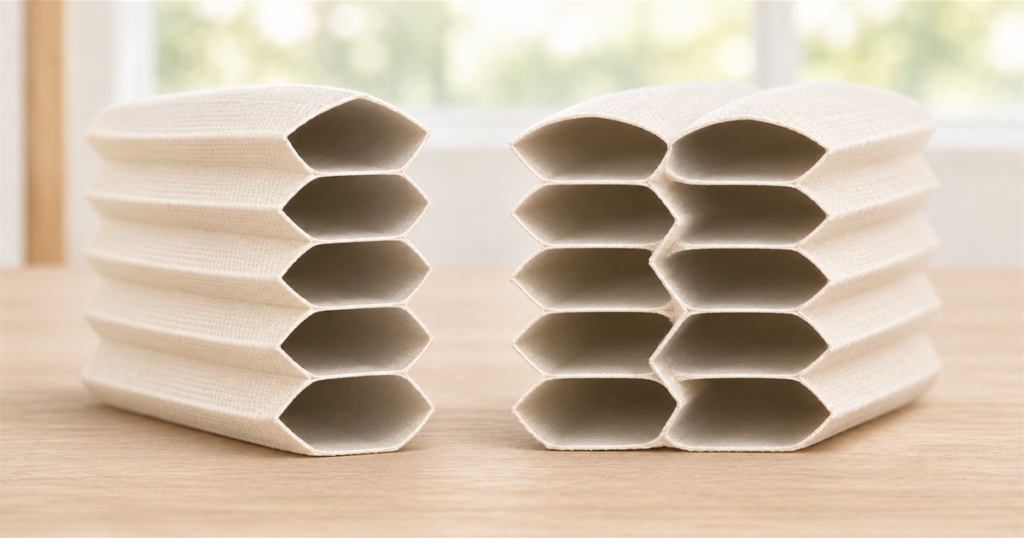
Single cell vs double cell cellular shades is mainly a comparison of honeycomb construction, insulation priorities, fabric choices, and fit. Single-cell shades have one row of air pockets. Double-cell shades have two. Double-cell construction is worth comparing when insulation matters, while single-cell options can suit different window proportions and design preferences.
For Kansas City homeowners, the useful question is which configuration fits the room and the way you use it. Cell count alone does not determine privacy, darkness, ease of operation, or the finished appearance.
Start with the problem you want to solve, then compare complete shade specifications. That approach makes the choice clearer than assuming that more cells automatically means a better shade for every window.
Single Cell vs Double Cell Cellular Shades: What does cellular shade construction mean?
Cellular shades use fabric formed into enclosed pockets that resemble a honeycomb when viewed from the side. These pockets distinguish them from ordinary pleated shades, which have folded fabric without the same cellular structure.
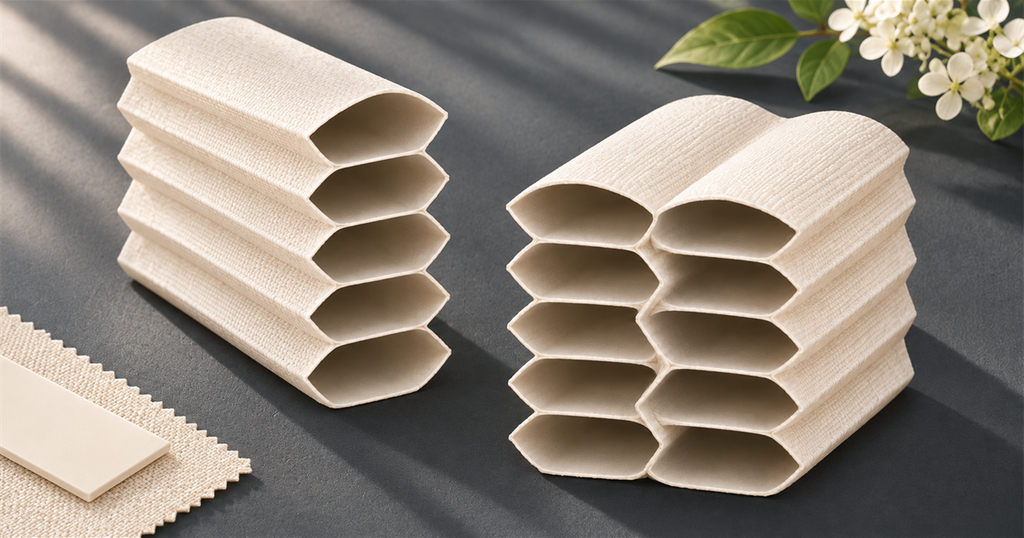
The pockets hold air within the shade. A single-cell shade has one row of pockets running through its depth. A double-cell shade adds a second row.
If you have been searching for graber honeycomb blinds, you are looking at the same broad product category commonly called cellular shades. The terminology describes the fabric structure, rather than a separate style of tilting blind.
Ask to see the edge of a sample. Seeing the pocket arrangement is often more helpful than trying to identify construction from a photograph of the front.
Single cell vs double cell cellular shades: the practical comparison
| Selection factor | Single-cell construction | Double-cell construction |
| Internal structure | One row of pockets | Two rows of pockets |
| Insulation priority | Compare the specific shade rating | Worth considering for added insulation |
| Visual scale | Available in different cell sizes | Compare the actual sample |
| Privacy | Determined by fabric and coverage | Determined by fabric and coverage |
| Room darkening | Depends on fabric and installation | Depends on fabric and installation |
| Best decision method | Match specifications to the opening | Match specifications to the opening |
Treat this comparison as a starting point. The best choice still depends on the exact fabric, control system, mounting conditions, and product availability.
Compare insulation without assuming a savings percentage
Cellular shades and the construction can help limit heat transfer at a window. Double-cell designs add another row of air pockets, making them a useful option to investigate when thermal comfort is a priority.
Graber identifies double-cell construction as its stronger insulation-oriented cellular option. However, that does not establish a household energy savings percentage or prove that every double-cell configuration outperforms every single-cell alternative in every installation. See Graber’s cellular shade guidance.
Ask whether comparable performance information is available for the specific products quoted. Compare equivalent conditions, rather than treating a general category statement as a measured result for your home.
Also separate window insulation from air leakage. A shade is not a repair for a damaged window seal or an opening that needs maintenance.
Keep cell size separate from cell count
Cell size describes the scale of the honeycomb. Cell count describes how many rows of pockets form the shade.
A larger single cell does not become a double cell because it looks deeper. Similarly, a double-cell shade does not automatically produce the broadest folds when viewed across a room.
Graber’s current cellular range includes multiple single-cell sizes and a double-cell option. Availability varies by fabric and configuration.
For a large living-room window, compare the visual rhythm of small and large folds. For several adjacent windows, look at how the chosen scale works across the whole wall.
Choose fabric opacity before deciding on darkness
If the main goal is better sleep, start with fabric opacity and edge coverage. Light-filtering fabric and blackout fabric do different jobs. A second row of cells does not automatically turn a light-filtering shade into a blackout shade.
Ask to see the proposed fabric against daylight. Then discuss light entering around the sides, headrail, and bottom of the installed treatment. The fabric description is only part of the result. The mounting arrangement also matters.
Keep this article’s construction comparison separate from a full light-control decision. Rick’s Blinds explains that neighboring topic in its guide to blackout versus light-filtering shades.
For a bedroom, write down whether your concern is early daylight, a nearby exterior light, daytime sleeping, or general privacy. Those needs can lead to different fabric and installation discussions.
Evaluate privacy under the conditions that matter
Privacy is not established by counting cells. A homeowner may want soft daylight in a living room but stronger visual screening in a bedroom. Another household may need coverage at a street-facing window without closing off all daylight.
Discuss the exact fabric and the viewing angles around your opening. If privacy matters after dark, evaluate the sample with interior lights on.
Where available for the selected configuration, top-down/bottom-up operation can provide flexible coverage. It still needs to be considered alongside fabric opacity and sightlines.
Do not assume that leaving the upper glass uncovered will preserve privacy from every nearby window. Think about the actual relationship between your room and surrounding views.
Match the choice to your Kansas City home
Local relevance starts with the opening itself. Two windows in the same Kansas City home can have different exposure, privacy needs, and daily routines.
A whole-home project does not require identical construction everywhere. It can require coordinated decisions.
For a frequently used living room
Compare daylight quality, fabric appearance, and how much of the window remains visible when the shade is raised.
If insulation is a secondary concern, begin with a single-cell sample that suits the opening. Then compare a double-cell alternative without changing several other specifications at once.
For a room that feels uncomfortable near the glass
Give insulation greater weight, but first describe when the discomfort occurs. A useful consultation note might be: “The chair beside this window feels uncomfortable during cold evenings.” That observation is more actionable than asking for the most energy-efficient shade without defining the problem.
For a bedroom
Prioritize privacy, darkness, and convenient operation. Compare cell construction after those requirements are clear.
A shade that meets an insulation goal but is inconvenient to close every night may not suit your routine.
Check fit, mounting depth, and everyday operation
Before selecting construction, have the opening assessed for the proposed product. Ask about inside-mount clearance, projecting handles, trim, and any obstructions. Request the depth requirements for the exact headrail and control system.
Also compare the raised stack. This is the folded material that remains at the top when the shade is open.
Ask these practical questions:
- Can everyone who uses the room reach and operate the shade comfortably?
- Will furniture limit access to the bottom rail?
- How will adjacent shades align?
- Is the selected control available for this window size?
- What will the treatment look like fully raised?
Cordless and motorized choices should be confirmed for the specific configuration. Avoid assuming that every fabric, dimension, and operating feature can be combined.
Compare quotes using the same specifications
A useful quote comparison includes more than the words single cell or double cell. Record the fabric name, opacity, color, cell size, mounting method, control system, measurements, and installation scope.
If one quote includes motorization and another includes manual operation, the price difference cannot be attributed to cellular construction alone. Ask what changes when moving between the proposed options. Keep the features you care about consistent wherever possible.
This also protects your design priorities. You may prefer one fabric’s texture or color enough to choose it over a different construction.
Long-term value comes from a treatment that fits the opening, supports the room’s purpose, and remains practical to operate.
Before your appointment, photograph each opening straight on and note the room’s main concern. Bring current paint references if color coordination is important. Keep measurements as preliminary planning notes until the installation dimensions are professionally confirmed. This preparation helps the conversation stay focused on the difference between construction choices, rather than allowing an attractive sample to distract from the problem you wanted the treatment to address.
Frequently asked questions
Are double-cell shades automatically blackout?
No. Cell construction and fabric opacity are separate specifications. Confirm the fabric’s light-control category and discuss light gaps around the installation.
Can single-cell shades still be a sensible choice?
Yes. Compare their appearance, available fabrics, operation, and product-specific performance against your room requirements. Double-cell construction is not a universal requirement.
Should every room use the same cell construction?
No. Coordinate visible colors and proportions while allowing different rooms to have different functional priorities. Check how the proposed choices look together.
How should I begin comparing Cellular Shades Kansas City options?
Start with the existing cellular shades product guide, then prepare a short list of room priorities and questions for your consultation.
Get guidance for your actual windows
Rick’s Blinds serves Kansas City and the greater area with custom window-treatment guidance and professional installation. Schedule a free consultation to compare cellular shade samples, confirm fit, and discuss the right construction for each room.