
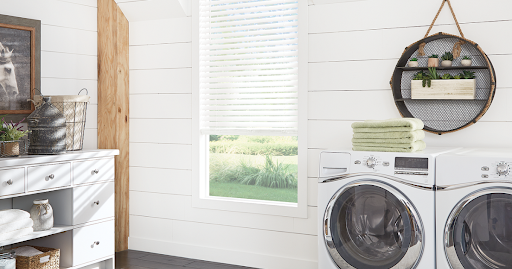
Natural materials, visible texture, warmer colors, and layered interiors are shaping some of the most noticeable window treatment trends for 2026. Instead of treating the window as a purely functional surface, homeowners are increasingly using shades to bring warmth, dimension, and character into the room. Natural shades, woven window shades, and other textured treatments fit naturally into that shift because they soften hard architectural lines while still providing practical control over privacy and daylight.
For Kansas City homeowners, this trend can be especially useful because it is adaptable rather than tied to one decorating style. A woven shade can work in a relaxed living room, a warm modern kitchen, a comfortable bedroom, or an updated traditional dining room.
Rick’s Blinds already offers woven wood shades as part of its custom shade selection, alongside cellular, Roman, solar, roller, and other window treatment options for homes throughout the Greater Kansas City area.
Current 2026 design coverage supports the broader move toward warmth, natural fabrics, natural woods, layering, and visible texture. Designers interviewed by Martha Stewart specifically point to bamboo, grasses, reed weaves, linen, and cotton as materials helping make window treatments feel warmer and more connected to nature. That makes modern natural shades more than a decorative trend. They are part of a broader movement toward homes that feel personal, tactile, comfortable, and intentionally designed.
Why Are Natural Shades Trending in 2026?
One reason natural shades feel especially relevant in 2026 is that homeowners are moving away from interiors dominated by flat surfaces, cool gray palettes, and uniform finishes. Texture is becoming an important way to make a room feel more layered without filling it with additional furniture or decorative objects.
A woven shade can introduce that texture directly to the window. Depending on the weave and material, it may show subtle variations in thickness, tone, and pattern that give the window more visual depth than a completely smooth covering. Natural materials also coordinate well with other popular interior elements such as wood flooring, stone surfaces, linen upholstery, textured rugs, warm metals, and earthy paint colors.
Rick’s Blinds’ offers natural materials, textured fabrics, customization, and layered treatments as important directions in window design. The continuation of those ideas into window treatment trends 2026 suggests that natural texture is developing into a broader design direction rather than functioning as a short-lived decorative novelty.
What Are Natural Shades?
Natural shades are window coverings created with materials or visual textures inspired by the natural world. Woven wood shades are one of the best-known examples because the weave itself becomes an important part of the finished appearance.
Graber Natural Woven Wood Shades use materials such as bamboo, jute, wood, and grasses, creating variations in color and texture that are characteristic of natural materials. The shades are handwoven and are available with different control and customization options.
This helps explain why natural shades look different from many conventional fabric shades. Rather than presenting the window as one perfectly uniform surface, the material itself contributes to the design.
The term organic window treatments is also commonly used when homeowners search for this aesthetic. It is important, however, not to assume that “organic” means a product has an organic certification. In interior design, the term is often used more broadly to describe natural-looking materials, earthy colors, tactile textures, and designs inspired by nature. Homeowners concerned about specific environmental certifications or material sourcing should confirm those details for the exact product they are considering.
What Are Woven Wood Shades?
Woven wood shades are shades created by weaving natural materials into a flexible window covering. Depending on the collection, those materials may include bamboo, reeds, grasses, jute, or wood elements.
The result can range from a fine, relatively subtle texture to a much more pronounced weave that becomes a noticeable design feature in the room. Some styles feel relaxed and casual, while others can look polished enough for modern or more formal interiors.
That versatility is one of the reasons woven window shades have remained relevant as decorating styles evolve. They do not need to turn a home into a rustic or tropical space. A restrained woven pattern in a warm neutral color can work with contemporary furnishings just as effectively as it can with farmhouse, transitional, coastal, or traditionally inspired interiors.
Graber describes its natural woven shades as suitable for a variety of décor styles and offers different colors, control options, liners, and finishing choices.
Texture Can Make a Neutral Room Feel More Finished
Neutral interiors remain popular, but neutral does not have to mean visually flat. In fact, one of the most effective ways to make beige, cream, tan, brown, or warm white interiors feel intentional is to combine several textures rather than relying on dramatic color changes.
Textured window shades can contribute to that approach because they occupy a large vertical surface in the room. A shade with an obvious weave can create contrast against smooth painted walls, glass, cabinetry, or stone while remaining within the same overall color family.
This is particularly useful in modern interiors. Clean architecture can sometimes feel stark when every finish is smooth. Adding natural texture at the windows introduces softness without taking away from the simplicity of the space.
The effect can also work in more traditional rooms. Woven shades can sit behind drapery panels or other decorative treatments, creating visual depth while allowing the softer fabric treatment to remain part of the design.
Layering Natural Shades Is Another Major 2026 Direction
Layered window treatments are another prominent theme in current 2026 design coverage. Instead of expecting one window covering to provide every functional and decorative benefit, homeowners can combine treatments to create more flexibility.
For example, woven wood shades can be paired with drapery to combine structured natural texture with softer fabric. Martha Stewart’s 2026 trend reporting specifically highlights combinations such as bamboo with linen as part of the move toward richer, more dimensional window design. Graber also promotes natural woven shades as a base for layered treatments and suggests combining them with soft layers or other design elements.
Layering should still have a practical purpose. A woven treatment may provide beautiful filtered daylight, while a liner or secondary treatment can improve privacy or room darkening. The result is often more useful than selecting layers only for appearance.
Do Natural Shades Provide Privacy?
Natural shades can provide privacy, but the amount depends heavily on the weave and whether a liner is used. A more open weave may allow greater daylight and create a lighter appearance, but it may also provide less privacy than a tightly woven or lined shade.
That means homeowners should evaluate natural shades under the conditions in which they will actually be used. A material that feels sufficiently private during daylight may perform differently at night when interior lights are on.
For bedrooms, bathrooms, street-facing rooms, or spaces close to neighboring properties, a liner may be worth considering. A liner can increase privacy and may also improve light control while preserving the texture of the woven shade facing the room.
During an in-home consultation, looking at actual material samples against the home’s natural light can make the decision easier than trying to judge weave density from a photograph alone.
Natural Shades Can Filter Light Without Hiding the Window
One of the strongest reasons to consider modern natural shades is the way they interact with sunlight. Rather than simply treating the window as open or closed, certain woven materials can soften incoming daylight and change how it feels in the room.
A textured weave can produce a warmer, more diffused effect than completely uncovered glass. This can be particularly attractive in living rooms, dining spaces, breakfast areas, and other rooms where daylight is desirable but direct glare may be uncomfortable.
Different windows still require different solutions. A heavily sun-exposed window may need stronger solar or light-control performance than a decorative woven shade provides by itself. This is why choosing a window treatment should begin with function before narrowing the decision by appearance.
Rick’s Blinds’ established approach emphasizes custom solutions based on each client’s needs rather than a single product for every window. The company offers design consultations and professional installation across its custom blinds, shades, shutters, drapery, and motorized window treatment categories.
Natural Shades Can Work With Smart and Motorized Homes
Natural texture and modern technology are not opposing design ideas. One of the more interesting developments in window design is the ability to combine traditional-looking materials with contemporary operating systems.
Graber offers motorized lift options on its Natural Woven Wood Shades, which can make larger or harder-to-reach shades easier to operate. Rick’s Blinds also offers motorized window treatments as part of its broader custom product selection.
That combination is especially relevant to window treatment trends 2026 because homeowners increasingly want technology to disappear into the design rather than dominate it. A room can have the warmth of woven texture while still benefiting from convenient operation and a cleaner, cord-free appearance.
Where Do Woven Window Shades Work Best?
Woven window shades can work in many rooms, but their color, weave density, liner, and operating system should be selected for the specific setting. A light, airy weave may be ideal in a living room where preserving daylight is important, while a lined natural shade may work better in a bedroom where privacy matters more.
Living rooms can benefit from the warmth and texture woven materials bring to larger windows. Dining rooms can use them to create a more finished and inviting atmosphere without relying on heavy drapery alone. Kitchens and breakfast spaces often pair naturally with woven materials because wood cabinetry, stone, tile, and other tactile surfaces already create a layered palette.
Bedrooms may also benefit from natural shades, but light control deserves closer attention. If the woven material does not provide enough room darkening on its own, adding the appropriate liner or combining the shade with another treatment may produce a better result.
How to Choose the Right Color for Natural Window Treatments
The safest approach is not automatically to match the shade to the wall color. Instead, look at the room’s existing undertones and materials.
Warm woods often pair naturally with shades containing tan, flax, caramel, or deeper brown tones. Cream and off-white rooms may benefit from lighter woven shades that add texture without creating a strong color break. Modern interiors with black or dark metal accents can handle deeper natural materials that create stronger contrast.
Homeowners should also consider how the material changes when sunlight passes through it. A sample may look one way in indirect interior lighting and noticeably warmer when installed against a bright window.
This is one reason custom selection can be useful. Seeing the materials in the actual room allows the homeowner to compare the shade against flooring, cabinetry, furniture, paint colors, and changing daylight rather than making the decision in isolation.
Are Natural Shades a Good Fit for Kansas City Homes?
Natural shades can work especially well in Kansas City because they are visually adaptable across many home styles. Their appeal is not dependent on a particular architectural period or neighborhood aesthetic, which makes them suitable for both traditional and updated interiors.
Kansas City homeowners should still think practically about sun exposure, privacy, room orientation, and seasonal comfort. A beautiful woven shade may be the right decorative choice, but certain windows could require a liner, layering, or a different shade type when stronger insulation or light control is the main goal.
Rick’s Blinds has been consulting on and installing Graber window treatments in the Greater Kansas City area since 2001. They provide personalized service, free in-home consultations, customization, and professional installation as important differences from a one-size-fits-all retail approach.
Frequently Asked Questions About Natural Shades
Are natural shades still in style in 2026?
Yes. Natural fabrics, bamboo, grasses, woven materials, layered window treatments, and visible texture are all appearing in current 2026 design coverage. The trend is part of a wider move toward warmer and more tactile interiors rather than simply a single window-treatment style.
What is the difference between natural shades and woven wood shades?
Natural shades are a broader category of window treatments associated with natural materials and textures. Woven wood shades are a specific type that uses woven materials such as bamboo, jute, grasses, reeds, or wood elements to create the shade.
Can woven wood shades provide privacy?
Yes, but privacy varies according to the openness of the weave. Homeowners who need stronger privacy can consider tighter weaves, liners, or layered window treatments depending on the room.
Can natural shades be motorized?
Some natural shade products can. Graber offers motorized lift as an option for Natural Woven Wood Shades, making this traditional-looking material compatible with more modern window operation.
Do natural shades work in modern homes?
Yes. Modern natural shades can introduce texture without making a contemporary room look traditional. Simpler weaves and restrained colors can complement clean architectural lines, neutral palettes, modern furniture, and minimalist spaces.
Bring Natural Texture Into Your Kansas City Home
The strongest window treatment trends for 2026 are not only about following a particular look. They reflect a broader preference for interiors that feel warmer, more individual, and more connected to natural materials. Natural shades, woven window shades, and textured window shades fit that direction because they add character while still performing an important function at the window.
For some homes, a light woven shade may be enough to soften daylight and add texture. Other spaces may benefit from lined woven wood shades, layered treatments, or motorized operation. The right choice depends on how much privacy, light control, convenience, and visual impact the room needs.
Rick’s Blinds helps homeowners throughout the Greater Kansas City area compare custom window treatment options, including woven wood shades and other natural-looking designs. With experience serving the area since 2001, the goal is to select a treatment that looks intentional in the room while also working properly for the window.
For homeowners interested in bringing warmth, texture, and a more natural feeling into their interiors, natural window treatments offer one of the most versatile ways to translate the 2026 design direction into a home that can still feel relevant well beyond the trend cycle.