
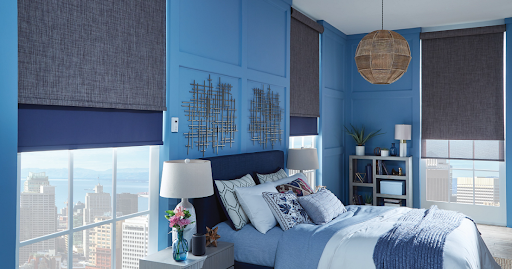
A bedroom should feel comfortable, private, and easy to adjust throughout the day. The right bedroom window treatments can help create that environment by controlling early morning sunlight, reducing nighttime visibility, managing glare, and giving you greater control over how much natural light enters the room.
For many homeowners, the best solution is not simply choosing blinds or shades based on appearance. The better approach is to think about what the bedroom actually needs, whether that means stronger darkness for sleeping, daytime privacy, insulation around the windows, adjustable light, or convenient motorized operation.
Kansas City homeowners also have changing seasonal conditions to consider. A bedroom that receives intense morning or afternoon sun during part of the year may need a different window treatment than a shaded room where preserving natural daylight is the bigger priority.
What Are the Best Window Treatments for Bedrooms?
The best window treatments for bedrooms generally combine privacy, comfortable light control, and a design that complements the room. Options such as blackout shades, cellular shades, roller shades, Roman shades, blinds, shutters, and motorized treatments can all work well when selected for the specific window and the way the room is used.
Some of the most practical choices include:
- Blackout shades for stronger room darkening and privacy
- Cellular shades for insulation, light control, and privacy
- Roller shades for a clean and streamlined appearance
- Roman shades for a softer, decorative look
- Wood or faux wood blinds for adjustable light control
- Shutters for durable privacy and directional light control
- Motorized shades for convenience and easier daily operation
- Layered treatments when the room needs multiple levels of privacy and light management
Rather than asking which option is universally best, homeowners should consider which features matter most in their own bedroom. A person who wants maximum darkness may prioritize blackout bedroom shades, while someone who wants privacy without losing daytime light may prefer cellular, light-filtering, or adjustable window treatments.
Rick’s Blinds works with custom blinds, shades, shutters, drapery, and motorized window treatments for homes throughout the Greater Kansas City area. The business has been consulting on and installing custom window treatments since 2001, giving homeowners access to personalized recommendations instead of a one-size-fits-all product selection.
Start With the Problem Your Bedroom Window Treatments Need to Solve
One of the most common mistakes when selecting bedroom window coverings is starting with color or fabric before considering function. Style matters, but privacy, darkness, window orientation, and everyday use should help determine which type of treatment will perform best.
Before selecting a product, consider questions such as:
- Does early morning sunlight wake you before you want to get up?
- Do streetlights or neighboring properties create unwanted light at night?
- Is the bedroom visible from nearby homes or the street?
- Do you want natural daylight during the day while maintaining privacy?
- Does the window area become noticeably hot during summer or cold during winter?
- Would automated opening and closing make the room easier to use?
- Are any windows tall, large, unusually shaped, or difficult to reach?
These questions help narrow the choices before you begin comparing colors and materials. When the primary concern is identified first, it becomes much easier to decide between bedroom blinds, blackout shades, cellular shades, shutters, or another custom solution.
Blackout Bedroom Shades for Better Room Darkening
For homeowners who want to reduce unwanted bedroom light, blackout bedroom shades are one of the strongest options to consider. Blackout materials are designed to prevent a significant amount of light from passing directly through the shade, which can make them especially useful for bedrooms affected by morning sunlight or exterior lighting.
Blackout window treatments can be particularly helpful in bedrooms used by:
- Light-sensitive sleepers
- Children who go to bed before sunset
- People who work evening or overnight schedules
- Guests who prefer a darker sleeping environment
- Homeowners with east-facing bedroom windows
- Anyone dealing with bright exterior lighting
It is important to understand that blackout fabric and total room darkness are not always the same thing. Even when the material itself blocks light effectively, small amounts of light can enter around the edges of a window treatment if the shade does not closely fit the window opening.
That is why custom measurement matters when comparing blackout shades in Kansas City, that homeowners may be considering. Proper sizing, mounting, fabric selection, and installation can all influence how much light enters around the treatment after installation.
Cellular Shades for Bedrooms Combine Several Benefits
Cellular shades for bedrooms are worth considering when you want more than one benefit from the same window covering. Their honeycomb-style construction creates pockets within the shade, which can help provide an additional layer between the room and the window while also offering privacy and light control.
Cellular shades are available with different levels of opacity, so homeowners can choose an option based on how much daylight they want to preserve. That flexibility makes them useful for primary bedrooms, guest rooms, children’s rooms, and other spaces where lighting needs may change throughout the day.
Light-Filtering Cellular Shades
Light-filtering cellular shades soften natural sunlight instead of attempting to eliminate it. They can help make a bedroom feel brighter during the day while reducing direct glare and maintaining a greater level of privacy than an uncovered window.
These shades can be particularly appealing in rooms that already receive limited daylight. Rather than making the bedroom feel unnecessarily dark throughout the day, a light-filtering fabric allows natural light to remain part of the room’s atmosphere.
Room-Darkening and Blackout Cellular Shades
When stronger darkness is the priority, homeowners can consider room-darkening or blackout cellular shade options. These treatments combine the structure of cellular shades with fabrics designed to reduce considerably more incoming light.
For Kansas City homeowners, cellular shades can also be attractive because energy efficiency is a recurring concern across changing seasons. Rick’s Blinds’ specifically identifies cellular shades, energy-efficient shades, and custom window treatments as important product areas for the business.
Privacy Shades Should Work During the Day and at Night
Privacy is one of the most important considerations in any bedroom, but privacy can change depending on the time of day. A window covering that appears private when daylight is brighter outside may perform differently at night when bedroom lights are on.
When comparing privacy shades, think about how much visibility you are comfortable with after sunset as well as during the day. Fabric opacity, window placement, interior lighting, and the location of neighboring homes can all affect the level of privacy a treatment provides.
Blackout and more opaque shades generally provide stronger privacy when fully closed. Light-filtering treatments can provide a balance between privacy and daylight, but the exact performance varies by material, so it is worth evaluating samples in the room where the shades will actually be installed.
Top-Down, Bottom-Up Shades Can Improve Daytime Privacy
Traditional shades typically open upward from the bottom of the window, which means bringing daylight into the room can also expose more of the interior. Top-down, bottom-up configurations give homeowners another way to manage privacy because part of the shade can remain over the lower portion of the glass.
This style can be useful for bedrooms facing neighboring properties, sidewalks, streets, or other areas where maintaining privacy at eye level is important. Light can enter through the upper portion of the window while the lower section remains covered.
For homeowners who want flexible light control shades, this type of operation can reduce the need to choose between a completely closed window and a completely exposed one. It is especially useful in bedrooms that are occupied during the daytime as well as at night.
Are Bedroom Blinds a Good Choice?
Yes, bedroom blinds can be a practical choice when adjustable light control is more important than creating the darkest possible room. Horizontal blinds allow the slats to be tilted, giving homeowners control over both the amount and direction of incoming sunlight.
Wood and faux wood blinds can also add visual structure and warmth to a bedroom. Depending on the room’s design, they can work well with traditional, transitional, modern, and casual interiors without making the window treatment feel overly decorative.
The best blinds for bedrooms are usually those that match the homeowner’s priorities. If you want to redirect natural light, adjust privacy throughout the day, and maintain a structured appearance, blinds may be an excellent fit.
If maximum room darkening is the primary objective, however, slatted blinds may not perform the same way as a continuous blackout shade. Small openings between slats and around the edges can allow light into the room, which is why the most appropriate option depends on the desired result rather than simply the product category.
Roller Shades Offer Clean and Simple Light Control
Roller shades are popular for bedrooms because their straightforward construction works with many interior styles. When lowered, the fabric creates a clean surface across the window, and when raised, the treatment can maintain a relatively simple visual profile.
Different fabric selections can provide varying levels of daylight management, from softly filtered sunlight to greater room darkening. This allows roller shades to work in bedrooms where homeowners want a minimal appearance without giving up important privacy or light-control features.
Roller shades can also be paired with other window treatments when more flexibility is needed. Combining a functional shade with decorative drapery, for example, can add softness and visual depth while providing another layer of light management.
Roman Shades Add Softness and Style to Bedrooms
Roman shades can be a strong option when homeowners want the functionality of a shade with the softer appearance of fabric. Their folds and material choices can help the window feel more integrated with bedding, upholstered furniture, rugs, and other bedroom textiles.
Depending on the selected material and lining, Roman shades can provide different levels of privacy and light control. This makes them suitable for bedrooms where design is important but the window treatment still needs to perform an everyday function.
For homeowners comparing different bedroom window treatments, Roman shades can be especially appealing in spaces where a plain blind feels too structured. They can create a more finished appearance while still allowing the room’s privacy and lighting requirements to guide the final configuration.
Motorized Shades Can Simplify Bedroom Routines
Motorized window treatments have become an increasingly practical option for homeowners who want easier daily operation. Instead of manually opening every shade in the morning and closing them again at night, compatible motorized treatments can simplify those repeated adjustments.
Motorization may be particularly useful for:
- Bedrooms with several windows
- Large window openings
- Hard-to-reach windows
- Homeowners using smart-home technology
- People who prefer convenient cord-free operation
- Rooms where shades are adjusted several times a day
Rick’s Blinds offers motorized window treatments as part of its custom window treatment services. The project materials also identify smart and automated window treatments as an important area of customer interest and future demand.
Choose Bedroom Window Treatments Based on Window Direction
The direction a bedroom faces can have a significant effect on the amount and timing of sunlight entering the room. Thinking about window orientation can help homeowners avoid choosing a treatment that looks good but does not adequately solve the room’s lighting problem.
East-Facing Bedrooms
East-facing bedrooms often receive stronger morning sunlight. If that light interferes with sleep, blackout bedroom shades or room-darkening cellular shades may provide more effective control than a light-filtering treatment alone.
West-Facing Bedrooms
West-facing bedrooms can receive stronger afternoon and evening sun. Solar exposure may create glare or make the room feel warmer, so homeowners may benefit from light-control treatments that reduce direct sunlight while preserving comfort.
Street-Facing Bedrooms
For street-facing rooms, privacy may be the first priority. Blackout shades, cellular shades, blinds, shutters, and other more opaque treatments can help reduce visibility into the bedroom when properly selected and positioned.
Bedrooms With Limited Natural Light
A bedroom that already receives little natural light may benefit from a less opaque daytime solution. Light-filtering privacy shades can help preserve available sunlight while creating a more comfortable balance between openness and privacy.
Layered Window Treatments Provide More Flexibility
One window treatment does not always need to handle every function on its own. Layering can allow homeowners to combine practical light control with softness, texture, or another level of privacy.
For example, a blackout roller or cellular shade can handle nighttime darkness, while curtains or drapery add decorative depth around the window. Another homeowner might pair adjustable blinds with fabric panels to create more flexibility between daytime and evening use.
The goal of layering should be functional as well as decorative. If the bedroom needs darkness, privacy, daytime light, and a finished design, combining compatible treatments may provide more control than asking one product to accomplish everything.
Why Custom Fit Matters for Bedroom Window Treatments
A bedroom shade is only as effective as its relationship to the window itself. Measurements, mounting position, frame depth, fabric selection, and operating style can all affect how much light enters, how private the room feels, and how smoothly the finished treatment operates.
This is particularly important with blackout treatments. A fabric may provide excellent light blocking, but a poorly fitted shade can still allow visible light around the edges of the window.
Custom window treatments are designed around the actual dimensions and requirements of the opening rather than a limited group of standard retail sizes. Rick’s Blinds provides free in-home consultations and professional window treatment installation, allowing homeowners to compare products and materials in the space where they will actually be used.
How to Choose the Best Bedroom Window Treatment
Choosing among blinds, shades, shutters, and motorized products becomes easier when you prioritize your needs in the correct order. Begin with function, then consider convenience, and finally select the color, texture, and finish that complement the bedroom.
A practical decision process is to consider:
- How dark the bedroom needs to be for comfortable sleep
- How much nighttime and daytime privacy is required
- Whether you want filtered daylight during waking hours
- Whether insulation around the window is a concern
- How frequently the treatment will be adjusted
- Whether motorization would improve convenience
- Which material and design best fit the room
Following that order helps prevent style from overshadowing performance. The most attractive shade in a sample book will not feel like the right choice if it allows too much morning light or does not provide the privacy you expected.
Frequently Asked Questions About Bedroom Window Treatments
What type of window treatment is best for a bedroom?
Blackout shades and cellular shades are strong choices for many bedrooms because they can provide privacy and effective light management. The best option still depends on whether darkness, insulation, adjustable daylight, style, or convenience is the homeowner’s main priority.
Are blackout shades better than blinds for bedrooms?
Blackout shades are generally more appropriate when reducing incoming light is the primary objective because the fabric creates a more continuous barrier across the window. Blinds can be preferable when homeowners want to tilt the slats and adjust the direction of daylight throughout the day.
Are cellular shades good for bedroom privacy?
Yes, cellular shades for bedrooms can provide effective privacy when the appropriate fabric opacity is selected. Homeowners can choose between lighter fabrics that preserve more daylight and more opaque treatments when privacy and room darkening are stronger priorities.
What are the best blinds for bedrooms?
The best blinds for bedrooms depend on the amount of adjustability and privacy you want. Wood and faux wood blinds are useful when directional light control is important, while homeowners seeking deeper room darkening may prefer a blackout shade instead.
What are the best shades for bedroom privacy?
Blackout shades, room-darkening cellular shades, and other more opaque window coverings are good options when privacy is the primary concern. Light-filtering privacy shades may be more suitable when homeowners want natural daylight during the day without leaving the window fully exposed.
Can bedroom window treatments be motorized?
Yes, many custom shades and other compatible window treatments can be motorized. Motorization can make bedroom light control more convenient, particularly for large windows, multiple windows, or shades that homeowners want to adjust as part of a regular morning and evening routine.
Find the Right Bedroom Window Treatments for Your Kansas City Home
The best bedroom window covering is not simply the product with the most features. It is the treatment that solves the specific combination of privacy, darkness, daylight, comfort, and convenience needed in that particular room.
Homeowners who want a darker sleeping environment may begin with blackout bedroom shades, while those balancing privacy and insulation may prefer cellular shades for bedrooms. Adjustable bedroom blinds, Roman shades, roller shades, shutters, privacy shades, and motorized treatments provide additional options depending on window placement and personal preferences.
Rick’s Blinds has been helping homeowners in the Greater Kansas City area choose and install custom window treatments since 2001. Its product offering includes blinds, shades, shutters, cellular shades, Roman shades, roller shades, motorized treatments, drapery, and other custom solutions designed around the individual window and the client’s needs.
A free in-home consultation allows homeowners to compare materials, opacity levels, operating systems, and design options in the actual bedroom rather than relying only on a screen or store display. By matching the window treatment to how the room is used every day, Kansas City homeowners can create bedrooms with better privacy, more comfortable light control, and a finished look that works with the rest of the home.