
Layered Window Treatments: How to Create a Luxurious Look with Blinds and Drapes
Layered window treatments are one of the most effective ways to give a room a polished, high-end appearance while improving privacy, light control, and comfort. By combining blinds and drapes, homeowners can create a customized look that feels more complete than using a single window covering alone.
The beauty of window treatment layering is that it brings together function and design. Blinds, shades, or shutters provide precise control over natural light and privacy, while drapery adds softness, color, texture, and visual height. When the materials are selected carefully, layered window coverings can make an ordinary room feel warmer, more inviting, and professionally designed.
Whether you are updating a living room, bedroom, dining space, or home office, this guide explains how to layer blinds and drapes successfully. You will also learn which fabrics, colors, hardware, and combinations work best for creating luxury window treatments that suit your home.
What Are Layered Window Treatments?
Layered window treatments combine two or more window coverings on the same window. A common design uses blinds or shades as the inner layer and curtains or drapes as the outer layer.
The inner treatment provides practical control over sunlight, glare, and privacy. The outer treatment adds visual depth and helps connect the windows to the rest of the interior design.
Popular combinations include:
- Roman shades with full-length drapes
- Roller shades with sheer curtains
- Wood blinds with decorative curtain panels
- Cellular shades with blackout drapes
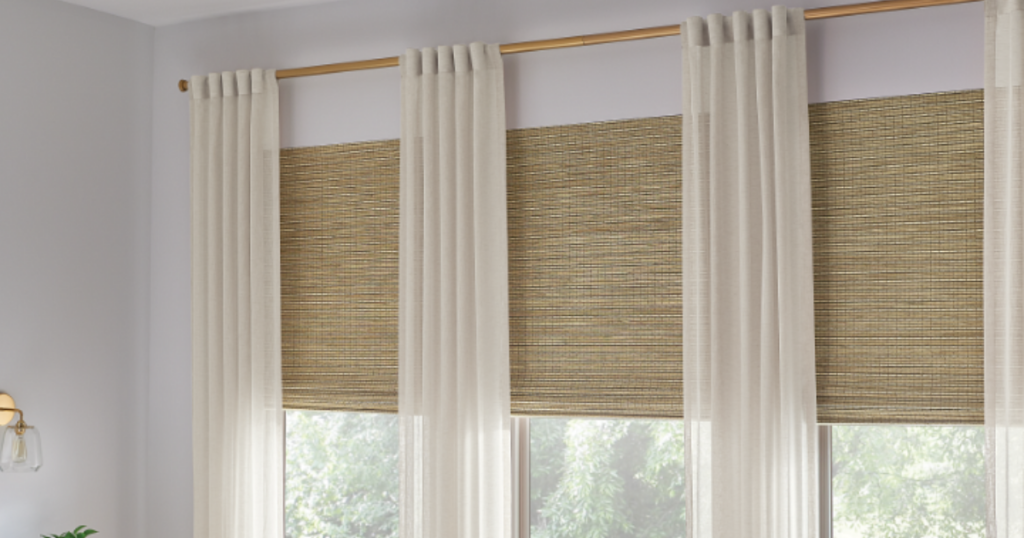
- Woven wood shades with linen curtains
- Solar shades with tailored drapery panels
Layering blinds and curtains creates flexibility because each layer can serve a different purpose. During the day, the inner shade may filter sunlight while the drapes remain open. At night, the drapes can close to provide additional privacy and a softer atmosphere.
Why Layer Blinds and Drapes?
Layered window coverings do more than improve appearance. They also help solve common challenges related to privacy, glare, insulation, and room comfort.
Better Light Control
One of the biggest advantages of layered window treatments is the ability to adjust natural light throughout the day. Blinds and shades can be tilted, raised, or lowered to manage glare, while drapes can provide wider coverage when stronger light reduction is needed.
Layered window treatments for light control are especially useful in living rooms, bedrooms, home offices, and media rooms. They allow homeowners to enjoy natural light without sacrificing comfort.
Improved Privacy
Combining shades and drapes for privacy gives you more control than either treatment can provide alone. A light-filtering shade can allow daylight into the room while reducing outside visibility. Drapes can then be closed in the evening for more complete coverage.
This approach works well for street-facing rooms, bedrooms, bathrooms, and homes with nearby neighbors.
Added Energy Efficiency
Windows can contribute to heat gain during summer and heat loss during winter. Adding multiple layers creates a stronger barrier between the glass and the room.
Energy-efficient window treatment and coverings such as cellular shades can be paired with lined drapes to help improve indoor comfort. The shade traps air near the window, while the drapery adds another layer of insulation.
For Kansas City homeowners, this type of layering can be useful during both hot summers and cold winters.
A More Luxurious Appearance
Drapery brings softness and movement to windows, while blinds and shades provide clean lines and structure. Together, they create the balanced, tailored look often seen in professionally designed homes.
Luxury window treatments do not need to feel formal or overly decorative. A simple roller shade paired with floor-length linen drapes can create an elegant result without making the room feel heavy.
How to Layer Blinds and Drapes
Learning how to layer window treatments such as blinds and drapes begins with choosing the right base treatment. The base layer should provide the main functional benefit, such as privacy, glare reduction, insulation, or room darkening.
The drapery should then support the room’s overall style and add the level of coverage you need.
Step 1: Choose the Functional Inner Layer
The inner layer is installed closest to the glass. Common options include Roman shades, roller shades, cellular shades, wood blinds, faux wood blinds, and solar shades.
Consider how the room is used before selecting the treatment.
For a bedroom, a room-darkening roller shade or cellular shade may be the best base layer. In a living room, a light-filtering Roman shade may provide the right balance of privacy and natural light. For a home office, a solar shade can help reduce screen glare without completely blocking the outdoor view.
Step 2: Select Drapery That Complements the Shade
Once the inner treatment is selected, choose drapes that coordinate with its color, texture, and style.
The two layers do not need to match exactly. In many cases, a subtle contrast creates a more interesting and intentional design.
For example:
- Pair neutral roller shades with textured linen drapes
- Combine woven wood shades with cream or ivory curtains
- Use white Roman shades with patterned drapery panels
- Match dark wood blinds with soft beige or taupe fabric
- Pair cellular shades with lined blackout drapes in a bedroom
The goal is to create harmony between the layers without making the window look overly busy.
Step 3: Choose the Right Drapery Length
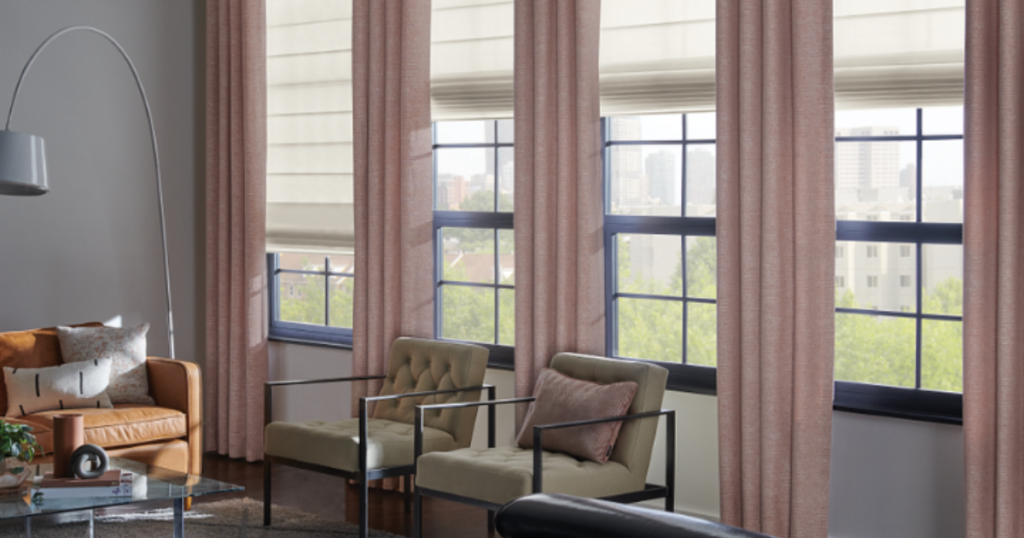
Floor-length drapes usually create the most luxurious appearance. Hanging the panels close to the ceiling and extending them to the floor can make the window look taller and the room feel larger.
Drapes should generally reach the floor without leaving a large gap. For a clean and tailored look, the fabric can lightly touch the floor. A slight break may work well in relaxed or traditional spaces, while pooled fabric creates a more dramatic style but requires additional maintenance.
Step 4: Install Drapery Beyond the Window Frame
Mounting the curtain rod wider than the window allows the drapes to stack beside the glass when open. This helps maximize natural light and makes the window appear broader.
Extending the rod several inches beyond each side of the frame also improves coverage when the drapes are closed.
Decorative hardware should be selected based on the room’s style. Simple black or brushed metal rods suit modern interiors, while wood, brass, or decorative finials may work well in traditional or transitional homes.
Best Blinds to Pair With Curtains
The best blinds to pair with curtains depend on the room, design style, and amount of light control needed.
Roman Shades and Drapes
Roman shades are one of the most popular choices for window treatment layering. Their soft folds coordinate naturally with fabric drapery, creating a polished and cohesive appearance.
Roman shades window treatments are available in solid colors, woven textures, decorative patterns, and multiple opacity levels. They work especially well in living rooms, dining rooms, bedrooms, and formal spaces.
For elegant window treatment ideas, pair a neutral Roman shade with patterned drapes or a textured shade with solid-color curtain panels.
Roller Shades and Drapes
Roller shades window treatments have a clean, compact design that allows the drapes to become the main decorative feature. This combination works well in modern, minimalist, and transitional interiors.
Light-filtering roller shades can soften sunlight during the day, while blackout drapes provide additional privacy and room darkening at night.
Modern blinds and curtain combinations often use roller shades because they are simple, versatile, and available in many fabric options.
Wood Blinds and Curtains
Wood blinds add warmth and structure to a room. They pair well with soft drapery because the contrast between the hard and soft materials creates visual balance.
Natural wood tones work beautifully with linen, cotton, and textured fabrics. Faux wood blinds can offer a similar appearance with added resistance to moisture and changing temperatures.
This combination is suitable for living rooms, dining rooms, home offices, and bedrooms.
Cellular Shades and Blackout Drapes
Cellular shades are a strong choice for homeowners who value insulation and energy efficiency. Their honeycomb structure traps air near the glass, helping to reduce heat transfer.
Pairing cellular shades with blackout drapes creates a practical solution for bedrooms, nurseries, media rooms, and other spaces where privacy and darkness are important.
This combination offers excellent layered window coverings for light control while supporting year-round comfort.
Woven Wood Shades and Linen Drapes
Woven wood shades introduce natural texture and an organic feel. They pair especially well with linen or linen-look drapes in neutral colors.
This combination works with organic modern, coastal, farmhouse, bohemian, and transitional interior design styles.
A privacy liner can be added to woven shades when more coverage is needed.
Sheer Curtains and Blinds
Sheer curtains can be layered over blinds or shades to soften the window without blocking too much natural light.
Sheers work well in living rooms, dining rooms, sunrooms, and other spaces where privacy is less important during the day. They add movement and softness while allowing the inner treatment to manage glare and privacy.
For greater nighttime coverage, sheer curtains can be combined with lined side panels or a second drapery layer.
Layered Window Treatment Ideas for Living Rooms
Living rooms benefit from treatments that balance natural light, privacy, and style. Because the living room is often a central gathering space, the windows should feel connected to the room’s furniture, rugs, paint colors, and decorative finishes.
Popular layered window treatment ideas for living rooms include:
- Woven wood shades with linen drapes
- Roman shades with decorative curtain panels
- Roller shades with floor-length neutral drapes
- Wood blinds with soft textured curtains
- Solar shades with tailored side panels
In smaller living rooms, use light colors and simple fabrics to avoid making the space feel crowded. In larger rooms, deeper colors, patterns, and heavier fabric textures can add warmth and visual interest.
How to Create a Luxury Look With Window Coverings
Creating a high-end result depends on proportion, fabric quality, hardware, and proper installation.
Use Full-Length Drapery
Short curtains can make windows look smaller. Full-length drapes create height and make the room feel more finished.
Add Fabric Fullness
Drapery should have enough fabric to look full when closed. Panels that are too narrow can appear flat and unfinished.
Coordinate Colors Carefully
Choose colors that relate to the room’s existing palette. Drapes can match the wall color for a calm, seamless look or introduce contrast for a stronger design statement.
Mix Textures
Fabric textures create depth. A smooth roller shade can be paired with textured drapes, while woven shades can be balanced with soft linen or cotton panels.
Choose Quality Decorative Hardware
Decorative hardware contributes to the overall appearance. Select rods, rings, brackets, and finials that match the scale and style of the room.
Use Custom Measurements
Custom drapery and blinds are measured for the exact window and room proportions. Proper sizing helps the treatments hang evenly, operate smoothly, and provide the intended coverage.
Common Layering Mistakes to Avoid
One common mistake is using too many bold patterns. If the shade already has a strong pattern, the drapes should usually be simpler.
Another mistake is choosing fabrics that are too heavy for the room. Thick blackout drapes can be useful in a bedroom, but they may make a small living room feel dark.
Incorrect rod placement can also affect the final look. Hanging the rod too close to the window frame can make the window appear smaller and reduce available daylight.
Homeowners should also avoid ignoring function. Beautiful blinds with curtains must still be easy to open, close, clean, and maintain.
Custom Layered Window Treatments in Kansas City
Custom layered window treatments in Kansas City can be designed around the size of your windows, the direction of sunlight, your privacy needs, and your preferred interior style.
Rick’s Blinds offers custom blinds, shades, drapery, shutters, and motorized window treatments for homes and businesses throughout the Greater Kansas City area. The company has provided window treatment consultation and installation services of Graber products since 2001.
A window treatment design consultation in Kansas City allows homeowners to compare fabric samples, colors, textures, operating systems, and decorative hardware in the room where the treatments will be installed.
This personalized approach can help ensure that custom blinds and curtains in Kansas City homes provide both the desired look and the right level of functionality.
Frequently Asked Questions About Layered Window Treatments
Can you put curtains over blinds?
Yes. Curtains can be installed over blinds to add softness, color, insulation, and additional privacy. The blinds should be installed close to the window, while the curtains hang from a rod mounted above and outside the frame.
Should blinds and drapes be the same color?
They do not need to match exactly. Coordinating colors and textures often create a more layered and sophisticated appearance.
Are layered window treatments good for energy efficiency?
Yes. Combining an insulating shade with lined drapes can help reduce heat transfer through the window and improve indoor comfort.
What is the best combination for a bedroom?
Cellular shades or room-darkening roller shades paired with blackout drapes provide excellent privacy, insulation, and light control.
Do layered window treatments work in modern homes?
Yes. Roller shades, Roman shades, solar shades, and streamlined drapery panels can create clean, modern blinds and curtain combinations.
Create a More Luxurious Look With Rick’s Blinds
Layered window treatments offer a practical way to improve both the function and appearance of a room. By combining blinds and drapes, homeowners can achieve better privacy, flexible light control, improved energy efficiency, and a more polished design.
The best results come from selecting treatments that work together in color, texture, proportion, and function. Whether you prefer Roman shades with drapery, roller shades with curtains, or woven wood shades with linen panels, thoughtful window treatment layering can help create a home that feels comfortable and professionally designed.
Rick’s Blinds provides custom drapery Kansas City homeowners can combine with blinds, shades, shutters, and motorized products. Schedule a free in-home consultation to explore layered window treatments Kansas City homeowners can personalize for their space, style, and everyday needs.